
Top Bar
  • About
  • Careers
  • Contact
  • About
  • Careers
  • Contact
Search Area
    • About BWSR Grants
      • Apply for BWSR Grants
      • Frequently Used Acronyms
      • Grant Information & Resources
      • Grants Quarterly Newsletter
    • Resources for Grantees
      • eLINK
      • Grants Administration Manual
      • Landscape Resiliency & Climate Change
        • Alliance to Advance Climate-Smart Agriculture
        • BWSR Climate Resiliency Toolbox
        • Carbon Sequestration: Conservation Practices and Programs
      • What’s Working for Conservation
      • Vegetation Establishment & Management
        • Native Vegetation and Biodiversity Collaborative
        • Native Vegetation Establishment and Enhancement Guidelines
        • Seed Mixes
        • Native Plant ID and Information
      • Restoring Conservation Lands
      • Overview
      • Programs
      • Easement Forms
      • RIM Handbook & Guidance
      • Existing Easements
      • SWCD Resources
        • Contacts
        • RIM Interactive Map
        • Geospatial Resources
        • Conservation Lands by County
        • Online Learning
        • RIM Rundown
        • Easement Alteration Policy
      • Living Landscapes Initiative
        • Lawns to Legumes: Your Yard Can BEE the Change
        • Pollinator Pathways Grants
        • Habitat Friendly Utilities Program
        • Habitat Enhancement Landscape Program (HELP)
        • Pollinator and Biodiversity Toolbox
          • Community Outreach
        • Managing Invasives for a Resilient Landscape
        • Minnesota Habitat Friendly Solar Program
        • Community Conservation
      • Lawns to Legumes
      • Pollinator Pathways
      • Habitat Friendly Utilities
        • What to Plant in Buffers
      • Minnesota Buffer Law
      • Buffer Establishment & Management Toolbox
      • Guide to the Buffer Compliance Process
        • Step 1: SWCD Compliance Review
        • Step 2: Landowner Notification
        • Step 3: Notice of Non-Compliance
        • Step 4: Corrective Action Notice Sent
        • Step 5: Issuing Enforcement Action
        • Step 6: Parcel is Compliant
      • Implementation Guidance
        • Average Buffer Widths
        • Buffer Measurement for a Public Drainage Ditch
        • Building Better Buffers
        • Compliance Determinations
        • Conservation Reserve Program Exemption Guidance
        • Determining Normal Water Level
        • Determining the Top or Crown of a Bank for Land Adjacent to a Public Water
        • Haying and Grazing of Buffers
        • Vegetation Establishment Goals
      • Procedures
        • Procedure 1: Compliance Determinations (Parcel and Bank Approach)
        • Procedure 2: Reporting and Progress Tracking
        • Procedure 3: MS4 Exemption
        • Procedure 4: Alternative Practices
        • Procedure 5: Other Alternative Practices Approved by the Board
        • Procedure 6: Local Water Resources Riparian Protection ("Other Watercourses")
        • Procedure 7: Failure to Implement
        • Procedure 8: Election of Jurisdiction
        • Procedure 9: BWSR's Review of County and Watershed District Buffer Rules, Ordinances and Official Controls
      • Alternative Practices
        • Alternative Practices Introduction
        • Common Alternative Practice #1: Minnesota Agricultural Water Quality Certification Program
        • Common Alternative Practice #2: NRCS Filter Strip Standard: MN 393/391 Practice Standards - Public Waters
        • Common Alternative Practice #3: Grassed Waterway/Cultivated Watercourses - Public Waters
        • Common Alternative Practice #4A: Negative Slopes or Concentrated Inflow - Public Ditches
        • Common Alternative Practice #4B: Glacial Lake Plain Areas - Public Ditches
        • Common Alternative Practice #5: Negative Slopes or Concentrated Inflow - Public Waters
        • Common Alternative Practice #6: Conservation Tillage/Cover Crops With Vegetated Filter Strip - Public Waters
        • Decision Support Tool
      • Election of Jurisdiction
      • Enforcement
      • Compliance Tracking Tool (BuffCAT)
      • Buffer Program Update
      • Contacts
      • Soils & Soil Health
        • Model Soil Loss Ordinance
        • Tillage and Erosion Survey Project
        • Soil Health Practices Grant
      • Daily Erosion Project
      • Working Lands Resources
      • Agricultural Lands
      • Forest Land
      • Peatlands
      • One Watershed, One Plan
        • One Watershed, One Plan Participating Watersheds
        • One Watershed, One Plan Policies
        • One Watershed, One Plan Resources
        • One Watershed, One Plan Videos
      • Metro Watershed Management Plan
        • Metro State Agencies Review Roster
        • Metro Update
      • Watershed District Management Plan (non-metro)
        • Amendments and Extensions
        • Development and Revision
      • Metro County Groundwater Plan
      • SWCD Comprehensive Plans
      • Planning Information
      • Working with State Agencies
        • State Agency Review Roster for County Water Plans and Watershed Management Plans
      • Water Storage & Climate Resilience
      • Groundwater Protection
      • Urban Stormwater Management
      • Prioritize, Target, and Measure Application (PTMApp)
      • Water Quality Tools & Models
      • Drainage in Minnesota
        • Understanding Minnesota Public Drainage Law
        • Other Drainage Resources
      • Minnesota Public Drainage Manual
      • Drainage Work Group
      • Drainage Management Team
      • Drainage Records Modernization
      • Chapter 103E Ditch Buffer Strip Reporting
      • Multipurpose Drainage Management
      • Wetlands Regulation in Minnesota
      • Wetland Conservation Act (WCA) Contacts
      • Joint Application Form
      • WCA Forms & Templates
      • WCA Program Guidance & Information
        • WCA Topics of the Week
      • WCA Rulemaking
        • WCA Rulemaking Comments Received
      • WCA Program Reports
      • 404 Assumption
      • Wetland Bank Credits and Fees
      • Wetland Bank Transaction Forms
      • Wetland Bank Guidance and Information
      • Local Government Road Wetland Replacement Program
      • Agricultural Wetland Bank
      • In-Lieu Fee Mitigation Program
      • Wetland Bank & Mitigation Easements
      • Wetland Delineation
      • Wetland Functional Assessment
      • MN Wetland Restoration Guide
      • Minnesota Stream Quantification Tool and Debit Calculator
      • Minnesota Wetland Professional Certification Program Information
      • Wetland Training Schedule and Registration
        • MWPCP Class Portal
      • Wetland Training Resources
      • Online Learning Library & Archive
      • Training Calendar
      • Technical Training and Certification Program
        • Area Technical Training Teams
        • Conservation Planning
        • Core Competency
        • Job Approval Authority
        • Technical Training Individual Development Plan (IDP) Tool
        • Technical Training Resources
      • MN Wetland Professional Certification Program Information
      • BWSR Academy
        • 2026 BWSR Academy
        • 2025 BWSR Academy
        • 2024 BWSR Academy
      • BWSR Spring Training
      • Training Updates
      • Successful Outreach Strategies
      • Performance Review and Assistance Program (PRAP) Grants
        • PRAP Grants
        • Conservation Project Planning and Promotion
          • Inspections
        • Invasive Species Control
        • Native Vegetation
        • Pollinator Habitat
        • Prairie, Savanna, Forest and Agricultural Projects
        • Stormwater, Shoreline and Wetland Projects
      • Standard Reviews & Checklists
        • FY25 Conservation Reserve Program State Incentives Grant Program
      • PRAP Legislative Reports
    • About BWSR
      • What We Do
      • Board
      • BWSR Executive Leadership
      • Staff
      • Strategic Plan
        • Engagement Process
      • Diversity, Equity and Inclusion
      • Affirmative Action Plan
      • Legislative Resources
      • Careers
      • Contact Us
    • About Our Partners
      • Soil and Water Conservation Districts
      • Watershed Districts
      • Watershed Management Organizations
      • Counties
      • Cities and Townships
      • Regional Partnerships
    • News & Publications
      • Subscribe
      • News Releases
      • BWSR Story Library
      • Conservation Stories
      • BWSR Snapshots
        • Snapshots Archive
      • Featured Plant
        • Featured Plant Archive
      • Reports

Search

  1. Home
  2. Search

CPS 380 Windbreak-Shelterbelt Establishment and Renovation Training Series

This training series provides an introduction to the knowledge, skills, and abilities to plan, design, and certify Windbreak/Shelterbelt Establishment and Renovation (CPS 380). Additional training may be needed.

CPS 380 Job Approval Authority Fact Sheet

Skill
Practice Specific
Source

TTCP

Training Type
Online Learning
Notes

Knowledge, Skills, and Abilities

1. Knowledge of windbreak/shelterbelt design and function
  • Tech Talk: Windbreak Planning Considerations

    • This session includes an overview of the Windbreak/Shelterbelt Establishment (CPS 380) practice standard and some of the additional planning considerations for windbreaks, shelterbelts, and living snow fences. Karin Jokela, Xerces Society, will be discussing wildlife habitat considerations, including those for pollinators and beneficial insects, and Dan Gullickson, MN DOT, will review porosity and setbacks as snow management considerations. This session also includes a demonstration on the use of Conservation Tree Shrub Groups (CTSG) and an overview of the Implementation Requirements worksheet.

  • Tech Talk: Windbreak Fundamentals

    • Gary Wyatt (UMN Extension) provides an overview of Windbreak/Shelterbelt Establishment (CPS380) practice and the windbreak design elements: height, density, and length. This session provides many examples of applications of windbreaks/shelterbelts as well as considerations for placement and design.

  • Windbreak Purposes

    • Richard Straight of the National Agroforestry Center discusses how windbreak design for specific purposes.

  • Introduction to Agroforestry Systems

    • Participants will learn about the five recognized agroforestry practices: Windbreaks, Alley Cropping, Silvopasture, Forest Farming and Riparian. (Time: 00:58)

  • UMN Extension Agroforestry Windbreaks

    • Windbreaks are plantings of trees, shrubs or a combination of the two, that reduce wind speed in an agricultural area. They can:

      • Reduce energy costs around farmsteads

      • Mitigate livestock odors

      • Reduce wind stress on crops and livestock

      • Manage snow

      • Provide wildlife habitat and timber products

  • Pollinator Friendly Multi-functional Windbreak Design

    • Mark Wonneck, of Agriculture and Agri-Food Canada discusses the habitat requirements for pollinator species and how they can be considered and incorporated into the design of windbreaks.

2. Knowledge of forest ecology and management for the local area
  • Enhancing Mast (food) Production for Woodland Wildlife

    • Fruit from trees and shrubs (aka mast) is a significant source of food for many wildlife species. This webinar will explore a variety of mast producing trees and shrubs found in eastern deciduous woodlands as well as their role in sustaining the wildlife species that depend on them. It will explore on some of the techniques, including crop tree management that can be employed to enhance the diversity and productivity of these woodland mast producers. (Time: 1:05)

3. Knowledge of crops protected by windbreaks and shelterbelts
  • WEPS Introduction

    • Review the sections of this document titled “Tolerances in Wind Erosion Control” beginning on page 8 through the end of the document.

4. Knowledge of silvics of tree species to be established
  • Silvics of North America

    • The silvical characteristics of about 200 forest tree species and varieties are described.  These represent most of the commercially important trees of the United States and Canada and some of those from Mexico and the Caribbean Islands, making this a reference for virtually all of North America.

  • USDA Plants Database

    • Search the database by species and read “Characteristics” and/or the “Plant Guide” for that species.

5. Knowledge of soil health and management
  • Unlock the Secrets in the Soil

    • A series of 41 videos, mostly under five minutes each that discuss various soil health topics and applications of soil health principles.

  • Soil Quality - the Foundation for Resource Management

    • (Time: 1:55) Participants in the webinar learn about Natural Resources Conservation Service conservation planning principles to improve soil health and the impact soil health has on other resource concerns, such as water quality.

  • Soil Health

    • (Time: 57:21) In this session, Dr. Jessica Gutknecht discusses soil health. When you think about the soil beneath your feet, or beneath your tractor, what does it mean for it to be healthy? What does it take for it to be healthy, and what are the results of those efforts? In this talk, we will explore the world below with a brief introduction to soils, how soil structure is built into a healthy soil, and some management options for building a healthy soil. We will also discuss the win-win of soil health for sustainable management and for adaptation to increasingly variable Minnesota weather and climate.

  • Living Soil Film

    • (Time 1:00:22) Our soils support 95 percent of all food production, and by 2060, our soils will be asked to give us as much food as we have consumed in the last 500 years. They filter our water. They are one of our most cost-effective reservoirs for sequestering carbon. They are our foundation for biodiversity. And they are vibrantly alive, teeming with 10,000 pounds of biological life in every acre. Yet in the last 150 years, we’ve lost half of the basic building block that makes soil productive. The societal and environmental costs of soil loss and degradation in the United States alone are now estimated to be as high as $85 billion every single year. Like any relationship, our living soil needs our tenderness. It’s time we changed everything we thought we knew about soil.

  • Tech Talk: Forest In Field Soil Health Assessment Tool

    • The Forestland In Field Soil Health Assessment (FIFSHA) was developed to assist conservation planners with evaluating the health of private nonindustrial forestland soils. During this session Tom Sauer, ACES Forester (NRCS), introduces assessments of the eight indicators of forest soil health:

      • Soil Cover

      • Woody Debris

      • Soil Burn Severity

      • Soil Disturbance Intensity

      • Soil Structure

      • Water Stable Aggregates

      • Soil Fauna/Biology Diversity

      • Roots

      Soil health is maintained or achieved in forestlands through application of four principles: 1) optimize presence of living roots, 2) optimize disturbance, 3) optimize soil cover, and 4) optimize biodiversity. The FIFSHA is designed to determine whether a site has any of the four soil health resource concerns: Aggregate Instability, Compaction, Soil Organism Habitat Loss or Degradation, and Soil Organic Matter Depletion.

6. Skills in use of pruning tools and equipment (Renovation specific)
  • Pruning Second Growth Stands

    • British Columbia Forest Services explains guidelines, tools, and timing of pruning.


Minnesota Guidance: Knowledge, Skills, and Abilities (KSAs)

Planning, Design, and Certification Phases

Job Class I

1. Read and understand the Conservation Practice Standard (CPS) 380, Implementation Requirements (IR), Guidance Document (GD), and Statement of Work (SOW)
  • CPS 380, Implementation Requirements (IR), Guidance Document (GD), and Statement of Work (SOW)
2. Understand Minnesota prevailing wind direction
  • Windbreak Design: How Windbreaks Work

    • Richard Straight of the National Agroforestry Center discusses how different windbreak design elements influence wind speed and flow.

  • Wind Rose Data

    • The National Water and Climate Center provides a dataset of wind rose plot images in .gif format. The images are organized by state, by city within each state, and then by month.

3. Ability to design all types of windbreaks except odor, pesticide drift, and living snow fence
  • Developing the "Tree and Shrub Planting Plan": Getting those Boots in the Field

    • Craig Stange of the National Agroforestry Center steps through the process of developing a tree and shrub planting plan for a windbreak/shelterbelt design.

4. Understand site preparation, planting methods and equipment
  • Tech Talk: Tree and Shrub Site Preparation (CPS 490)

    • This Tech Talk is about tree/shrub site preparation (CPS 490) and tree/shrub planting methods. This session includes a discussion of planning considerations for site preparation and matching the site preparation techniques to the site conditions. Different types of tree stock and planting methods are discussed along with planning considerations for successful tree/shrub establishment. Available web soil survey reports are demonstrated and other resources for practice planning are provided.

  • Tree Planting with a Mechanical Planter

    • This video provided by the Montcalm Conservation district is a dynamic demonstration of how to plant tree seedlings using a mechanical planter. Typically used for plantings of 500+ tree seedlings.

  • Hand Tree Planting

    • In this video Montcalm Conservation District explains in detail how to plant trees by hand.

5. Ability to document environmental benefits of a windbreak/shelterbelt
  • Wind Erosion Prediction with WEPS

    • This course provides an overview of the Wind Erosion Prediction System (WEPS), and instructions on how to use the WEPS model to estimate wind erosion.

  • Windbreak/Shelterbelt Establishment and Renovation Network Effects Diagram (NED)

    • An NRCS network effects diagram is a flowchart showing the direct, indirect, and cumulative consequences of implementing a conservation practice. It serves as a visual communication tool illustrating both potential positive and negative outcomes for natural resources, with plus (+) or minus (-) signs indicating an increase or decrease in resource effects, not necessarily whether the effect is beneficial or adverse. These diagrams provide an overview of expert consensus on the effects of conservation practices, helping users understand the interconnected impacts on resources like soil, water, and wildlife.

  • Windbreak/Shelterbelt Establishment and Renovation Conservation Practice Physical Effects (CPPE)

    • The Conservation Practices Physical Effects (CPPE) matrix provides a qualitative assessment of how specific NRCS conservation practices influence natural resources like soil, water, air, and plants, as well as human aspects such as animals, energy, land, labor, capital, and risk. Developed by interdisciplinary teams of specialists, these tools help planners understand the potential outcomes, both positive and negative, of implementing different conservation measures by providing general statements on their expected effects and helping in the conservation planning process.

6. Knowledge of tree and shrub pests and diseases that may influence species selection and management
  • Minnesota DNR Forest Health web page

    • DNR Forestry's forest health unit is responsible for surveys, evaluations, and impact assessments of forest pests and diseases and technical assistance for public and private landowners on tree and forest health and invasive species.

7. Ability to select appropriate species for site conditions such as hydrology, soil type, topography, ecology, and other conditions
  • Tough Trees and Shrubs for Tough Sites

    • This document from UMN Extension details species selection for "tough sites"

8. Ability to use the Conservation Tree/Shrub Groups excel workbook located on the FOTG
  • Tech Talk: Conservation Tree Shrub Groups (CTSGs)

    • The Conservation Tree-Shrub Groups (CTSGs) are a planning tool that aid in the selection of trees and shrubs for planting based on soil type. During this session Garett Christiansen (Forester, NRCS) and Brandon DeFoe (Soil Scientist, NRCS) will share information about recent updates to this tool and the lists of tree and shrub species recommended for different soil types.

  • Tech Talk: Tree/Shrub Establishment CPS 612 (2022)

    • In this session Callie Bertsch, NRCS State Forester, and Kelly Voigt, TTCP Training Conservationist, cover Tree/Shrub Establishment practice (CPS 612). This session covers the use of Web Soil Survey to identify Conservation Tree/Shrub Groups and using the CTSG group spreadsheet to select species of trees/shrubs to plant. This session also tree spacing specifications for different planting purposes and other tree/shrub selection factors. In addition, participants will become familiar with the Implementation Requirements worksheet for the 612 practice standard.

9. Understand tree and shrub planting row spacing, both between and within row
  • Tech Talk: Windbreak Planning Considerations

    • This session includes an overview of the Windbreak/Shelterbelt Establishment (CPS 380) practice standard and some of the additional planning considerations for windbreaks, shelterbelts, and living snow fences. Karin Jokela, Xerces Society, will be discussing wildlife habitat considerations, including those for pollinators and beneficial insects, and Dan Gullickson, MN DOT, will review porosity and setbacks as snow management considerations. This session also includes a demonstration on the use of Conservation Tree Shrub Groups (CTSG) and an overview of the Implementation Requirements worksheet.

  • Tech Talk: Tree and Shrub Establishment Practice (CPS 612)

    • In this session Callie Bertsch, NRCS State Forester, and Kelly Voigt, TTCP Training Conservationist, cover Tree/Shrub Establishment practice (CPS 612). This session covers the use of Web Soil Survey to identify Conservation Tree/Shrub Groups and using the CTSG group spreadsheet to select species of trees/shrubs to plant. This session also tree spacing specifications for different planting purposes and other tree/shrub selection factors. In addition, participants will become familiar with the Implementation Requirements worksheet for the 612 practice standard.

10. Understand techniques to protect trees from wildlife damage
  • Woodland Stewardship for Landowners: Managing Deer Damage to Young trees

    • Browsing by deer on planted and naturally regenerated hardwood seedlings is one of the greatest obstacles to seedling establishment in many parts of the central hardwood region. In this Woodland Stewardship For Landowners, Purdue Wildlife Extension Specialist Brian MacGowan talks about different types of deer damage and how landowners could mitigate the damage.

11. Ability to identify tree and shrub species
  • Tech Talk: Dendrology 101

    • Callie Bertsch, NRCS State Forester, and Jon Sellnow, TTCP Coordinator, present the basics of tree and woody shrub identification of native Minnesota species. They look at identification by family groups, leaf structure, bark, when the trees bloom or leaf out and when they change color in the fall, and even take a look at common forest health issues that affect each species. All things to help you identify the species to better take inventory and identify resource concerns when working with private landowners.

12. Ability to add a row to an existing windbreak
  • Shelterbelt Renovation: Manitoba experience

    • Richard Warkentin of the Stanley Soil Management Association in Manitoba presents on their experience with shelterbelt renovations.

  • Windbreak Renovation: North Dakota experience

    • Wells County (ND) SWCD Manager, Anne Ehni describes their experience with windbreak renovation.

  • Assessment of Windbreak Condition and Indicators to Renovate

    • Steve Rasmussen, a National Forest Service District Forester presents on evaluating the condition of an existing windbreak to determine if it needs to be renovated.

Job Class II

1. All requirements from Job Class I

See content above

2. Ability to design a windbreak for pesticide drift
  • Windbreak Purposes

    • Richard Straight of the National Agroforestry Center discusses how windbreak design for specific purposes.  REPEATED: Begin Video at 1:51:43

3. Ability to use WIN-PST
  • Using WIN-PST for Conservation Planning

    • This course introduces you to the Windows Pesticide Screening Tool (WIN-PST). You will learn what the tool is and how to run it. You will also learn how to interpret reports it generates and how they can be used when working with clients. You’ll also see how using this tool fits in the Nine Steps of Conservation Planning.

4. Ability to replace a row in an existing windbreak
  • Renovation: Experiences in the Field

    • Video describes need for windbreak renovation, equipment and various techniques that can be used.

Job Class III

1. All requirements from Job Class I and II

See content above

2. Ability to design a windbreak for odor control and living snow fence
  • Ability to use the MN DOT/UMN Drift-Free Roads Design Tool: University of Minnesota -Snow Fence

    • Snow fences can help maintain clear roadways by capturing blowing snow upwind of a problem area and storing that snow over the winter season. This web site is formatted as a tool that will help you design a snow fence for a given problem location. Based on the geographic location you have selected, you will be given the data needed and you will input site-specific parameters. Color maps, photos, and schematics are given along the way to help you visualize concepts.

  • Blowing Snow Control Tools

    • University of Minnesota resources for design of Living Snow Fences. This site includes a design tool, a video on how to run the design tool, a cost benefit tool, and a video on how to use it plus many videos on the variations and benefits of snow fences for preventing snow drifts on roads.

  • Ability to use UMN Extension’s Odor From Feedlot Setback Estimation Tool (OFFSET)

    • University of Minnesota resources for design of a windbreak for odor control.

Job Class IV

1. All requirements from Job Class I, II, and III

See content above

2. Ability to design a windbreak renovation with individual plant thinning and individual plant replacement within row
  • Windbreak Renovation

    • Millions of acres across North America are protected by thousands of windbreaks. Many of these windbreaks are in need of renovation. This video features a variety of renovation techniques that can be used to prolong the effectiveness of windbreaks. Techniques described include sod release, coppicing, thinning, pruning, row removal, supplemental planting, and root pruning. Traditional renovation equipment such as chainsaws and bulldozers are demonstrated along with equipment innovations which may be more efficient and less expensive The video concludes with two stories of windbreak renovation, one of a farmer and the other of a public land manager.

Job Class V

1. All requirements from Job Class I, II, III, and IV

See content above
Related Practices & Terms

Windbreak, Shelterbelt, Establishment, Renovation, Tree, Shrub, Planting, 380, 650

Keep it Clean Grant Program FAQs

This is intended to assist applicants in understanding the key elements of the Keep it Clean Grant Program (RFP) and contains answers to questions about the program. Please submit questions to ara.gallo@state.mn.us.

Last updated: 9/23/2025

  • Read more about Keep it Clean Grant Program FAQs

CPS 595 Pest Management Conservation System

This training series provides an introduction to the knowledge, skills, and abilities to plan, design, and certify Pest Management Conservation Systems (CPS 595). Additional training may be needed.

CPS 595 Job Approval Authority Fact Sheet

Skill
Practice Specific
Source

TTCP

Training Type
Online Learning
Notes

Knowledge, Skills, and Abilities

1. Knowledge of crops, grazing, and forestry production systems for the geographic area
  • Corn Pest Management

    • This website provides information on insects, diseases and nematodes affecting corn.

  • Forage Pest Management

    • This website provides information on alfalfa diseases and insects.

  • Small Grain Pest Management

    • This website provides information about diseases and insects common to Minnesota small grain crops.

  • Soybean Pest Management

    • This website provides information on insects and diseases affecting soybean.

  • Sugarbeet Pest Management

    • This website provides information on insects and diseases affecting sugarbeets.

  • Weed Management

    • This website provides information on weed identification, herbicides and herbicide resistance management.

  • Forest pests and diseases

    • This Minnesota DNR website has links to forest pests and disease descriptions, identification and management options.

2. Ability to use the current Pesticide Screening tool (WIN-PST)
  • Using WIN-PST for Conservation Planning

    • This course introduces you to the Windows Pesticide Screening Tool (WIN-PST). You will learn what the tool is and how to run it. You will also learn how to interpret reports it generates and how they can be used when working with clients. You’ll also see how using this tool fits in the Nine Steps of Conservation Planning.

3. Ability to use Current Wind and Water Erosion Prediction Tools
  • Erosion 101

    • This training module focuses on the types of erosion and the resource concerns associated with erosion.  It orients participants to the types and processes of soil erosion to prepare them to utilize the current soil erosion models - RUSLE2 and WEPS.   

  • Water Erosion Prediction with RUSLE2

    • This course provides an overview of the Revised Universal Soil Loss Equation (RUSLE), and instructions on how to use the RUSLE2 model to estimate sheet and rill erosion.

  • Wind Erosion Prediction with WEPS

    • This course provides an overview of the Wind Erosion Prediction System (WEPS), and instructions on how to use the WEPS model to estimate wind erosion.

4. Completion of the initial Pest Management training technical assistance with supervision
  • On the Job Training

5. Completion of the Pest Management course
  • Pest Management, Track 2, Part 1

    • This training course introduces NRCS' mission in the nutrient and pest management arena and how it relates to the RMS planning process. It also identifies regulatory requirements and partnership roles that help to define that mission. It provides the participant with a basic understanding of the science of nutrient and pest management, as well as environmental concerns associated with the use of nutrients and pest management measures, including environmental risk, and the processes that affect the fate and transport of nutrients and pesticides in the environment. Also covered are climate and water management planning considerations and their practical aspects as they relate to nutrient and pest management. The course contains a video that illustrates the challenges of pest and nutrient management. After successful completion of the self-paced Modules 1 - 6, participants will use exercises and assessment tools in a facilitated session to reinforce and apply important concepts. The participant will prepare a nutrient and/or pest management component of a RMS plan to complete the training.

6. Have a current Pest Management Applicator license as required by law in the state of practice
  • Only applicable to pesticide applicators

Practice Specific Training
  • Integrated Pest Management Policy and Related Conservation Practice

    • (Time: 18:18 min) The first section of the PowerPoint will focus on National General Manual Policy GM190-404 Subparts A-D along with Conservation Practices and Enhancements that may require running WIN-PST.

  • Integrated Pest Management Conservation Practice Standard (595)

    • (Time: 26:58 min) The second section of the PowerPoint will focus on the standard differences and updates to the new Integrated Pest Management Conservation Practice Standard (595).

  • Windows Pesticide Screening Tool (WIN-PST) and National Agronomy Technical Note 5

    • (Time: 24:27 min) This third section of the PowerPoint will focus on how to use the WIN-PST tool and mitigating hazard results from the tool by using the National Agronomy Technical Note 5.

  • CSP 595 Integrated Pest Management Implementation Requirements Demonstration

    • Adam Reed, Regional Agronomist with NRCS, demonstrates the use of the Integrated Pest Management Implementation Requirements worksheet.  The worksheet has been programmed in Excel.  It accepts data files from WIN-PST and is integrated with information from Agronomy Technical Notes 5 and 9. Watch this webinar recording to see how much easier pesticide planning can be!

  • Pest Management and Water Quality Implications

    • This course provides training in common pesticides and the impacts of their presence in water bodies. It provides an overview of fate and transport pathways and common practices to address pest management.  The course also includes an introduction to WIN-PST.

Other Training Opportunities
  • CORE 4 Pest Management Technical References 

    • (Time: will vary)  Basic overview of pest management principles.  Materials concentrate on assessing environmental risks of pest management alternatives.

  • Hot Topics in Weed Management:  Putting the pieces together

    • With the multitude of crop herbicide resistant trait packages available, chemical weed control has become more complicated, especially as herbicide resistant weeds continue to cause management challenges.  A good understanding of weed biology and trait package options along with results from field trials implementing chemical and non-chemical methods will help you get the most out of your weed management investment.

  • Herbicide Trait Technology: What to Use When, Where and How

    • Where does it make most sense to use certain herbicide tolerance traits? What are some of the things you should consider when using them? Learn more in this discussion with Dr. Debalin Sarangi, Extension weed scientist and Dr. Tom Peters, Extension sugarbeet agronomist.

  • Nutrient and Pest Management Equipment

    • This short course looks at application equipment you may see in corn and soybean producing areas.

  • Nutrient and Pest Management Equipment

    • This short course looks at application equipment you may see in corn and soybean producing areas.

  • High Tunnel System

    •  This video is about a high tunnel that was built in St. Paul Minnesota by Urban Roots during the summer of 2018 with financial and technical assistance from USDA/NRCS. Urban Roots has been growing vegetables on the East Side of St. Paul for 20 years. This years planted crops include cucumbers, peppers, and ginger. This video demonstrates the step-by-step procedure for building a high tunnel in an urban setting. The advantages and methods for growing vegetables, including pest management in a high tunnel system, are discussed. (10 minutes, 39 seconds)

  • Your Insect Allies: Meet the Beneficial Insects that Control Crop Pests and Promote Soil Health

    • Join Karin Jokela, Pollinator Conservation Specialist with the Xerces Society, to get to know some of the most common beneficial insects above and below ground. We will cover habitat planning to promote natural enemies and beneficial soil invertebrates, basic identification and ecology, as well as simple monitoring techniques to help farmers, land managers, and gardeners assess existing populations.

  • Pest Management From an Ecological Framework

    • No-till, cover crops, and diverse rotations are well known practices that can improve soil health. While they improve soil quality, these practices can simultaneously help build robust populations of soil invertebrates, including predatory species that can be allies in pest control. Unfortunately, many farmers trying to improve soil health appear to be inadvertently handicapping their farming systems by overusing pesticides, particularly insecticides and fungicides. Fortunately, Integrated Pest Management (IPM) provides an established economic framework for deploying pesticides as necessary. Our research suggests that incorporating IPM alongside other soil health practices maximizes the potential for farm fields to better withstand pest invasion while diminishing the potential for pesticides to degrade benefits provided by soil health practices.


Minnesota Guidance: Knowledge, Skills, and Abilities (KSAs)

Planning, Design, and Certification Phases

Job Class I (Drift)

1. Read and understand the Conservation Practice Standard (CPS 595), Implementation Requirements (IR), and Statement of Work (SOW)
  • CPS 595 Practice Standard, Implementation Requirements (IR), and Statement of Work (SOW)
2. Read and understand USDA-NRCS GM-190-404 Pest Management Policy 
  • GM-190-404 Pest Management Policy
  • Integrated Pest Management Policy and Related Conservation Practice

    • (Time: 18:18 min) The first section of the PowerPoint will focus on National General Manual Policy GM190-404 Subparts A-D along with Conservation Practices and Enhancements that may require running WIN-PST

3. Ability to document IPM/PAMS activities
  • CPS 595 IR sheet in the FOTG

  • Windows Pesticide Screening Tool (WIN-PST) and National Agronomy Technical Note 5
    • (Time: 24:27 min) This third section of the PowerPoint will focus on how to use the WIN-PST tool and mitigating hazard results from the tool by using the National Agronomy Technical Note 5.
  • CSP 595 Integrated Pest Management Implementation Requirements Demonstration
    • Adam Reed, Regional Agronomist with NRCS, demonstrates the use of the Integrated Pest Management Implementation Requirements worksheet.  The worksheet has been programmed in Excel.  It accepts data files from WIN-PST and is integrated with information from Agronomy Technical Notes 5 and 9. Watch this webinar recording to see how much easier pesticide planning can be!
4. Knowledge of Mitigation Techniques needed for Drift from National AGR-TN-5 Pest Management in the  Conservation Planning Process
  • Agronomy Technical Note #5

5. Complete a PMCS plan using 595 MN IR (Additional Criteria Requirement not required). (Plan will be reviewed by ARC; planner must demonstrate understanding of PAMS techniques)
  • CPS 595 Practice Standard, Implementation Requirements (IR), and Statement of Work (SOW)

6. Ability to find information on a pesticide label related to Environmental Hazards and Active Ingredients
  • Pesticide labels available on Greenbook's website

  • How to read a pesticide label

    • When handling chemicals, it is important to know what different parts of the label mean and how to interpret them correctly. Gatlin Bunton and Katie Kammler will walk you through how to correctly read a label. Video created by Katie Kammler, Gatlin Bunton and Rachel Hopkins of University of Missouri Extension.

Job Class II (Surface Runoff) and III (Leaching)

1. Knowledge of pesticide (insecticides, herbicides, fungicides, etc.) used in Minnesota agriculture, forests, conservation land and associated ag land to properly interview producers on use
  • Pesticide licensing in Minnesota is available on MDA’s website

2. Ability to calculate Active Ingredients (A.I.) applied per acre
  • Instruction of calculating active ingredients per acre on the UMN Extension website

3. Ability to plan Mitigation Techniques needed for surface and ground water from national AGR-TN-5
  • Agronomy Technical Note #5: Pest Management in the Conservation Planning Process

4. Complete a pest management plan using 595 MN IR including all requirements for Additional Criteria. (Plan will be reviewed by ARC; planner must demonstrate understanding of PAMS techniques and mitigation practices/techniques)
  • CPS 595 Practice Standard, Implementation Requirements (IR), and Statement of Work (SOW)

Job Class IV (Beneficial Organisms)

1. Ability to plan Mitigation Techniques needed for beneficial organisms from national AGR-TN-9
  • Agronomy Technical Note #9: Preventing or Mitigating Potential Negative Impacts of Pesticides on Pollinators Using Integrated Pest Management and Other Conservation Practices

Job Class V (All)

1. Understanding of limiting factors in organic cropping systems and use of pest management strategies common in Minnesota
  • Beating the Weeds Without Herbicides: Soil-Friendly Organic Weed Management
    • Join us for this webinar during which we will discuss weed management in organic agriculture and highlight soil friendly approaches to help maintain sufficient weed suppression and satisfactory organic yields. Weeds pose the #1 production hurdle to successful organic farming, and organic producers continually seek to optimize their weed management system for both soil health and production. This webinar will describe an ecological approach to integrated organic weed management including preventive measures based on the four NRCS principles of soil health, managing nutrients and moisture to favor crops over weeds, choosing weed-competitive crops and cultivars, and a diverse toolbox of weed control tactics that reduce the need for cultivation. Together, these practices can minimize the impacts of organic weed management on soil life and soil structure while maintaining sufficient weed suppression and satisfactory organic yields.

Related Practices & Terms

Integrated, Pest Management, Pest, IPM, 595

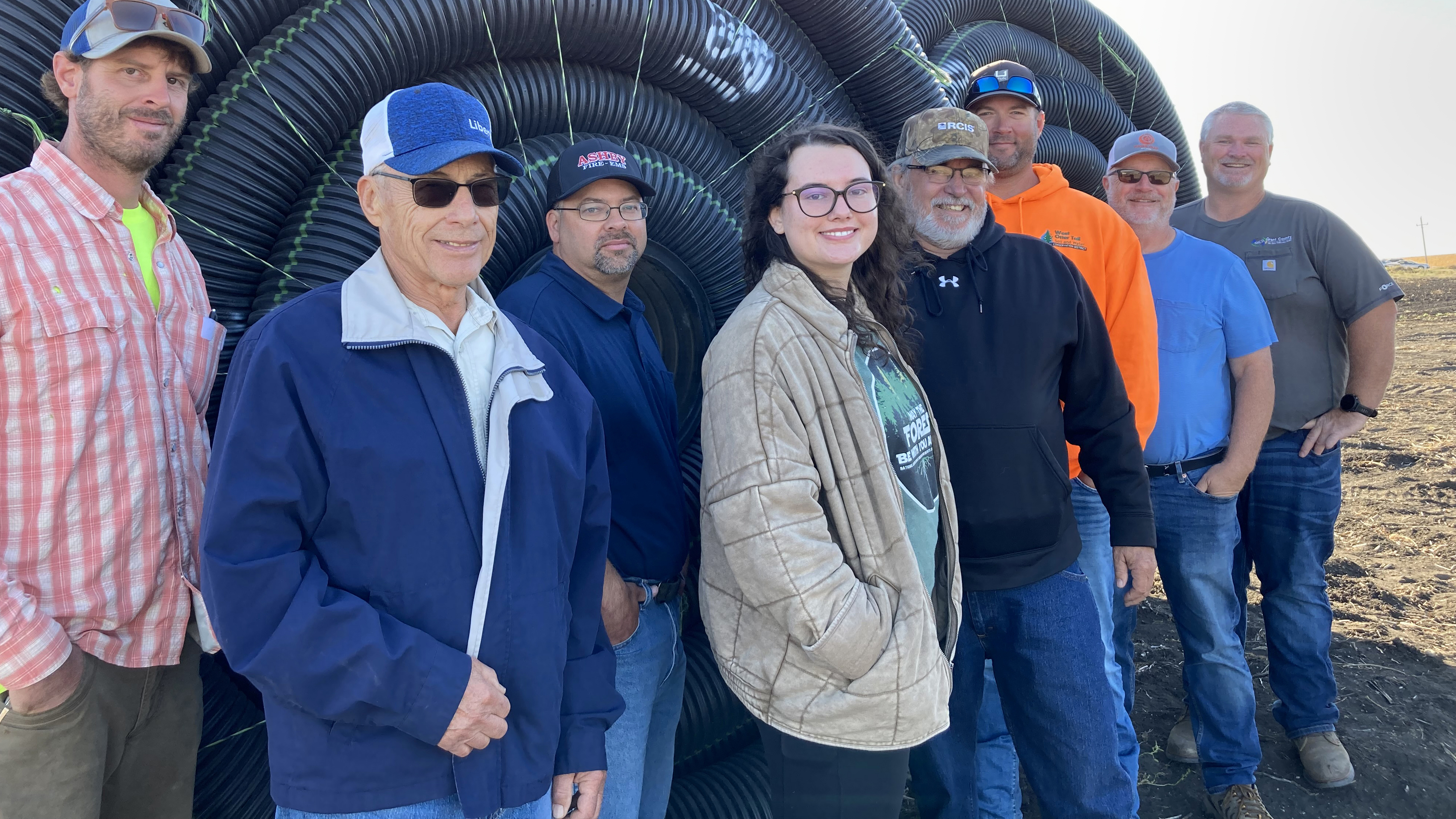
Pomme de Terre watershed priorities drive Grant County SWCD erosion control work

Conservation Story Image
eight people stand in front of rolls of black plastic tile with a bare field in the background
Conservation Story File
Media File
Grant County SWCD PDTRA WBIF.pdf
Conservation Story Text

Farm fields and water quality both benefit from the two-landowner, 19-structure Clean Water Fund-supported project that helps keep topsoil in place and out of the river and Perkins Lake downstream.

Conservation Story Featured
Off

Webinar 2: Wetlands in a Watershed at the Landscape Scale

This second webinar, delivered in six segments, in NAWM and NRCS’s jointly-developed nine-part wetland training webinar series begins with an overview of where wetlands can occur in landscapes. Next, the webinar will explore the three key considerations with wetlands – hydrology, geology (soils), and vegetation. The presenters will cover the importance of hydrology for wetlands, including temporal changes and the importance of time scale, the soil-water relationship and parent/source materials when looking at hydric soils, as well as kinds of wetland plants and what plant patterns tell you about how water runs off the land and the wetland itself. This webinar will also cover influences from specific living resources, how different land uses affect wetlands (with a focus on agricultural land use), and how wetlands are a reflection of their surrounding landscape and watershed. The webinar will conclude with discussion on how wetlands change over time and tools that can be used to understand these changes. Participants will come away from the webinar with an increased understanding of patterns on the landscape, how to identify wetlands at the watershed and field level and prepare to look at individual wetland sites.

  • Part 2.0 – Welcome and Overview: Brenda Zollitsch, Policy Analyst, Association of State Wetland Managers  Time: 06:30
  • Part 2.1 – Introduction: Kendra Moseley, USDA Natural Resources Conservation Service  Time: 16:50
  • Part 2.2 – Presenter: Stacey Clark, USDA Natural Resources Conservation Service Time: 17:00
  • Part 2.3 -- Presenter: Lenore Vasilas, USDA Natural Resources Conservation Service Time: 18:45
  • Part 2.4 -- Presenter: Stacey Clark, USDA Natural Resources Conservation Service Time: 24:30
  • Part 2.5 -- Summary:  Kendra Moseley, USDA Natural Resources Conservation Service  Time: 08:15
Subject TTCP
Basic Tech Skills (Matrix)
Skill
Wetland ID & Ecology Basics
Format
Webinar
Source

NAWM, NRCS

Time
92 minutes
Training Type
Online Learning
Location

United States

Notes

Recorded August, 2018

Online Location
Webinar 2: Wetlands in a Watershed at the Landscape Scale

October 2025 Featured Plant: Large-leaved aster

October 2025 Snapshots

Keep it Clean Program now accepting grant applications

Contact: Mary Juhl; (651)-215-9008

ST. PAUL, Minn. – The Minnesota Board of Water and Soil Resources (BWSR) is now accepting grant applications for the Keep it Clean Program, a new initiative which aims to protect Minnesota’s lakes by preventing water pollution from garbage and other waste left on the ice of state waters during winter use activities such as ice fishing.

Eligible applicants include soil and water conservation districts, watershed districts, watershed management organizations, cities, counties, townships and joint powers organizations. The grants will support activities that help prevent pollution such as ice cleanup events and education and outreach efforts. Individual awards will range from $10,000 to $40,000.

“The Keep it Clean Program will engage winter sporting communities to help find ways they can proactively protect the resources Minnesotans rely on for ice fishing and other winter recreational activities,” said BWSR Executive Director John Jaschke. “Cutting down on waste will improve water quality and keep these lakes ready for more people to enjoy throughout the year.”

The Keep it Clean Program is funded by a one-time, $200,000 general fund appropriation made earlier this year. Applications will be accepted through Oct. 29. Learn more about how to apply.

CPS 666 Forest Stand Improvement Training Series

This training series provides an introduction to the knowledge, skills, and abilities to plan, design, and certify Forest Stand Improvement (CPS 666). Additional training may be needed.

CPS 666 Job Approval Authority Fact Sheet

Skill
Practice Specific
Source

TTCP

Training Type
Online Learning
Notes

Knowledge, Skills, and Abilities

1. Knowledge of tree identification
  • Tech Talk: Dendrology 101

    • Callie Bertsch, NRCS State Forester, and Jon Sellnow, TTCP Coordinator, present the basics of tree and woody shrub identification of native Minnesota species. They look at identification by family groups, leaf structure, bark, when the trees bloom or leaf out and when they change color in the fall, and even take a look at common forest health issues that affect each species. All things to help you identify the species to better take inventory and identify resource concerns when working with private landowners.

  • Tree Identification

    • University of Minnesota resources for the identification of trees: Tree Identification Cards that can be downloaded and printed, Beginners Guide to Minnesota Trees, and Winter Identification Key

2. Knowledge of forest ecology and management including tree regeneration
  • Introduction to Conservation Forestry

    • This course informs conservation planners about basic forest ecology and forest management practices to establish a foundation for implementing forestry and agroforestry conservation practices. Planners will learn about common objectives of forest landowners, threats to forests, the forest inventory process, forest management plans, and laws, regulations, and permits related to forest management. The course includes client stories to demonstrate the planning process with clients who have diverse forest types across the United States.

  • Tech Talk Replay: Forestry Resource Concerns

    • Tech Talk replay from May 4, 2020. Celie Borndal, NRCS State Forester, reviews common forestry resource concerns and planning criteria.

  • Enhancing Mast (food) Production for Woodland Wildlife

    • Fruit from trees and shrubs (aka mast) is a significant source of food for many wildlife species. This webinar will explore a variety of mast producing trees and shrubs found in eastern deciduous woodlands, as well as, their role in sustaining the wildlife species that depend on them. It will explore on some of the techniques, including crop tree management that can be employed to enhance the diversity and productivity of these woodland mast producers. (Time: 1:05)

  • What’s at risk? Implications of climate change on forests and options for adaptation

    • Climate change is altering forest ecosystems, with many changes expected by the end of the 21st century. Forests vary widely, and not all forests are equally at risk; vulnerabilities are strongly influenced by regional differences in climate impacts and adaptive capacity. Further, as an increasing amount of scientific information on forest vulnerability to climate change becomes available, natural resource managers are searching for ways to realistically use this information to meet specific management needs, ranging from landscape-level planning and coordination to on the ground implementation.

  • Crop Tree Management for Forest Stand Improvement

    • This webinar provides insight into how meeting the sunlight needs of individual crop trees can facilitate Forest Stand Improvement efforts. (Time: 00:56)

3. Knowledge of silvics of tree species to be managed
  • NPC Silviculture Strategies for Forest Stand Prescriptions

    • The Division of Forestry has developed silviculture strategies to inform sustainable forest management in Minnesota. These documents include information on the following key elements for each native plant community (NPC) class:

      • Vegetation, structure, and composition

        • Landscape setting and soils

        • Tree suitability

        • Tree response to climate change

        • Tree establishment and recruitment

        • Stand dynamics and growth stages

        • Two page silvicultural strategies for each major natural disturbance agent

  • Emulating Forest Disturbance with Silviculture

    • The U.S. Fish and Wildlife Service has developed a Forest Ecology and Management course focused on advancing knowledge and skills for USFWS biologists, foresters and others who manage forests on refuges or partner lands to meet wildlife habitat needs and objectives. This webinar is an overview of the course which is designed to introduce biologists and others to the concepts of forest disturbance ecology, basic silvicultural approaches and the design of silvicultural prescriptions that will either emulate conditions more typical of natural disturbances or meet the needs for a particular set of species. The course covers field skills, stand exams, forest dynamics modeling, cruising, marking and harvesting. The course and presentation focus on using emulation of natural forest disturbances as a main thesis.

4. Knowledge of invasive plant identification and management, and effects on forests
  • Invasive Terrestrial Plants

    • Invasive terrestrial plants can disrupt native landscapes like prairies, wetlands, and forests. They also negatively impact agriculture economies and can be harmful to our health. Learn more about the invasive plants that are threatening Minnesota and what you can do to help by visiting the resources on this page.

5. Knowledge of identification and management of forest insects and diseases
  • Forest pests and diseases (DNR)

    • This Minnesota DNR website has links to forest pests and disease descriptions, identification and management options. 

  • Minnesota Forest Health Highlights from 2021

    • Each year, the Minnesota DNR Forest Health team conducts both aerial assessments and on-the-ground monitoring to assess the health of the state’s forests. Join us for this webinar as MN DNR Forest Health Specialists provide an update on the status and trends in forest health from all corners of the state.

  • Forest pests and diseases (UMN)

    • This University of Minnesota website has links to forest pests and disease descriptions, identification and management options. 

6. Knowledge of short- and long-term management effects on forest stand condition
  • 2022 Webinar: Adaptive Silvicultural Experiments in Midwestern Hardwood Forests: Examples from Floodplains and Oak-dominated Uplands

    • Join Drs. Miranda Curzon and Marcella Windmuller-Campione as they discuss their work on two Adaptive Silviculture for Climate Change (ASCC) project sites. The ASCC project represents a collaboration between managers and scientists to establish experimental trials that assess forest ecosystem response to climate adaptation approaches (resistance, resilience, transition, and passive no action). Miranda will introduce a new multi-state ASCC study to be implemented on state-owned lands in the Driftless Area. Next, Marcella will provide two-year results and insights from another ASCC site, a 736-acre urban floodplain forest in St. Paul, MN on the Mississippi River. 

  • Adaptive Silviculture for Climate Change: Lessons for timber-oriented managers

    • The Adaptive Silviculture for Climate Change (ASCC) project is designed to demonstrate adaptation options to natural resource managers and help them integrate climate change considerations into silvicultural decision making. Climate adaptation approaches being examined are designed to sustain ecosystem services into the future, including timber production. As one of the original developers of the ASCC adaptation framework, Brian Palik will discuss research results of interest to stakeholders having timber (or revenue) production as primary objectives. For example, what are the timber production tradeoffs, if any, associated with treatments designed to increase resilience? What growth responses have been observed since treatments were implemented? How are novel timber species, i.e., those adapted to climate change, responding to the treatments? How can these results inform management in similar forest ecosystems across the northern Lake States?

7. Knowledge of soil health and management
  • Unlock the Secrets in the Soil

    • A series of 41 videos, mostly under five minutes each that discuss various soil health topics and applications of soil health principles.

  • Soil Quality - the Foundation for Resource Management

    • (Time: 1:55)  Participants in the webinar learn about Natural Resources Conservation Service conservation planning principles to improve soil health and the impact soil health has on other resource concerns, such as water quality.

  • Soil Health

    • (Time: 57:21)  In this session, Dr. Jessica Gutknecht discusses soil health. When you think about the soil beneath your feet, or beneath your tractor, what does it mean for it to be healthy? What does it take for it to be healthy, and what are the results of those efforts? In this talk, we will explore the world below with a brief introduction to soils, how soil structure is built into a healthy soil, and some management options for building a healthy soil. We will also discuss the win-win of soil health for sustainable management and for adaptation to increasingly variable Minnesota weather and climate.

  • Living Soil Film

    • (Time 1:00:22) Our soils support 95 percent of all food production, and by 2060, our soils will be asked to give us as much food as we have consumed in the last 500 years. They filter our water. They are one of our most cost-effective reservoirs for sequestering carbon. They are our foundation for biodiversity. And they are vibrantly alive, teeming with 10,000 pounds of biological life in every acre. Yet in the last 150 years, we’ve lost half of the basic building block that makes soil productive. The societal and environmental costs of soil loss and degradation in the United States alone are now estimated to be as high as $85 billion every single year. Like any relationship, our living soil needs our tenderness. It’s time we changed everything we thought we knew about soil.

8. Knowledge of resource impacts of harvesting, including fire hazard, water quality, wildlife effects, etc. 
  • Application of Forestry Best Management Practices for Water Quality Protection

    • Forestry Best Management Practices (BMPs) are techniques and practices used to minimize and prevent water quality problems associated with. (Time: 1:00)

  • Forestry Equipment

    • Duane Fogard, American Bird Conservancy Forester,  from the  Duluth Field Office,  will lead us in a review of commonly used forest equipment that we may encounter in the state.  This training is for anyone who is working in a region of the state who has significant areas of land dedicated to forests to consider attending, especially if you are newer to forestry or would like to “brush up” on terminology or identification of commonly used equipment, availability,  suitability, and limitations based on site characteristics.

  • Forest Management Guideline Online Training

    • The Forest Management Guidelines provide valuable decision-making tools for landowners, resource managers and loggers throughout Minnesota, who share an ongoing responsibility to make balanced, informed decisions about forest use, forest management and forest sustainability.  The online training is designed to familiarize the user with the layout and use of the Forest Management Guidelines document.   

9. Knowledge of local markets and economics of harvesting 

No content identified

10. Basic knowledge for recognizing potentially special sites and Threatened and Endangered (T&E) species, sufficient to initiate contact with the appropriate specialist 
  • Environmental Evaluation Series No. 6: Planning for Endangered Species / Migratory Birds / Bald and Golden Eagles Special Environmental Concerns

    • As the sixth in the series on environmental evaluations, this webinar will assist USDA NRCS conservation planners, partners, and technical service providers to understand the ecological importance of protected species and how to properly analyze and document existing conditions and the effects of planned conservation actions. Primary topics include: legal foundations, information/data sources, tools, mitigation measures, and documentation requirements including examples.

  • Request Natural Heritage Database training access through your Area Resource Conservationist

11. Basic knowledge of visual quality management in forests
  • Forest Management Guideline Online Training (Visual Quality module)

    • The Forest Management Guidelines provide valuable decision-making tools for landowners, resource managers and loggers throughout Minnesota, who share an ongoing responsibility to make balanced, informed decisions about forest use, forest management and forest sustainability.  The online training is designed to familiarize the user with the layout and use of the Forest Management Guidelines document.


Minnesota Guidance: Knowledge, Skills, and Abilities (KSAs)

Planning Certification Phases

Job Class I

1. Read and understand the Conservation Practice Standard (CPS) 666, Implementation Requirements (IR), and Statement of Work (SOW)
  • CPS 666 Practice Standard, Implementation Requirements (IR), and Statement of Work (SOW)

2. Ability to document environmental benefits of forest stand improvement. Conservation planners must understand the NRCS resource concern cause of “degraded plant condition”
  • Tech Talk Replay: Forestry Resource Concerns

    • Tech Talk replay from May 4, 2020. Celie Borndal, NRCS State Forester, reviews common forestry resource concerns and planning criteria.

3. Knowledge of Minnesota forests, common forestry goals, proper planting techniques, establishment techniques, and site conditions (hydrology, soil capability, landscape position)
  • Introduction to Conservation Forestry

    • This course informs conservation planners about basic forest ecology and forest management practices to establish a foundation for implementing forestry and agroforestry conservation practices. Planners will learn about common objectives of forest landowners, threats to forests, the forest inventory process, forest management plans, and laws, regulations, and permits related to forest management. The course includes client stories to demonstrate the planning process with clients who have diverse forest types across the United States.

  • NPC Silviculture Strategies for Forest Stand Prescriptions

    • The Division of Forestry has developed silviculture strategies to inform sustainable forest management in Minnesota. These documents include information on the following key elements for each native plant community (NPC) class:

      • Vegetation, structure, and composition

      • Landscape setting and soils

      • Tree suitability

      • Tree response to climate change

      • Tree establishment and recruitment

      • Stand dynamics and growth stages

      • 2-page silvicultural strategies for each major natural disturbance agent

4. Ability to identify tree and shrub species during the growing and dormant seasons
  • Tech Talk: Dendrology 101

    • Callie Bertsch, NRCS State Forester, and Jon Sellnow, TTCP Coordinator, present the basics of tree and woody shrub identification of native Minnesota species. They look at identification by family groups, leaf structure, bark, when the trees bloom or leaf out and when they change color in the fall, and even take a look at common forest health issues that affect each species. All things to help you identify the species to better take inventory and identify resource concerns when working with private landowners.

  • Tree Identification

    • University of Minnesota resources for the identification of trees: Tree Identification Cards that can be downloaded and printed, Beginners Guide to Minnesota Trees, and Winter Identification Key

5. Knowledge and understanding of silviculture regeneration methods utilized in forest stands with less than or equal to 4 overstory tree species as outlined in the Minnesota guidance for overstory species
  • NPC Silviculture Strategies for Forest Stand Prescriptions

    • The Division of Forestry has developed silviculture strategies to inform sustainable forest management in Minnesota. These documents include information on the following key elements for each native plant community (NPC) class:

      • Vegetation, structure, and composition

      • Landscape setting and soils

      • Tree suitability

      • Tree response to climate change

      • Tree establishment and recruitment

      • Stand dynamics and growth stages

      • Two page silvicultural strategies for each major natural disturbance agent

6. Ability to determine harvest equipment operability for well suited sites
  • Soils Module 2: Web Soil Survey

    • This course will cover information to assist users of soils information with accessing and interpreting soils data and information produced by the National Cooperative Soil Survey including a review of the online interface.

7. Understand nonvolatile fuels and their fire risk in Minnesota

No content identified

8. Knowledge of invasive plants found in Minnesota
  • Invasive Terrestrial Plants

    • Invasive terrestrial plants can disrupt native landscapes like prairies, wetlands, and forests. They also negatively impact agriculture economies and can be harmful to our health. Learn more about the invasive plants that are threatening Minnesota and what you can do to help by visiting the resources on this page.

9. Knowledge of the MN Forest Resources Council Site Level Forest Management Guidelines document
  • Forest Management Guideline Online Training

    • The Forest Management Guidelines provide valuable decision-making tools for landowners, resource managers and loggers throughout Minnesota, who share an ongoing responsibility to make balanced, informed decisions about forest use, forest management and forest sustainability.  The online training is designed to familiarize the user with the layout and use of the Forest Management Guidelines document.

Job Class II

1. All Requirements from Job Class I

See content above

2. Knowledge and understanding of silviculture regeneration methods utilized in forest stands with less than or equal to 6 overstory tree species as outlined in the Minnesota guidance for overstory species
  • NPC Silviculture Strategies for Forest Stand Prescriptions

    • The Division of Forestry has developed silviculture strategies to inform sustainable forest management in Minnesota. These documents include information on the following key elements for each native plant community (NPC) class:

      • Vegetation, structure, and composition

      • Landscape setting and soils

      • Tree suitability

      • Tree response to climate change

      • Tree establishment and recruitment

      • Stand dynamics and growth stages

      • Two page silvicultural strategies for each major natural disturbance agent

3. Ability to determine harvest equipment operability on moderately suited soils
  • Soils Module 2: Web Soil Survey

    • This course will cover information to assist users of soils information with accessing and interpreting soils data and information produced by the National Cooperative Soil Survey including a review of the online interface.

4. Understanding of live volatile fuels and their fire risk in Minnesota

No content identified

Job Class III

1. All Requirement from Job Class I & II

See content above

2. Knowledge and understanding of silviculture regeneration methods utilized in forest stands with less than or equal to 10 overstory tree species as outlined in the Minnesota guidance for overstory species above
  • NPC Silviculture Strategies for Forest Stand Prescriptions

    • The Division of Forestry has developed silviculture strategies to inform sustainable forest management in Minnesota. These documents include information on the following key elements for each native plant community (NPC) class:

      • Vegetation, structure, and composition

      • Landscape setting and soils

      • Tree suitability

      • Tree response to climate change

      • Tree establishment and recruitment

      • Stand dynamics and growth stages

      • Two page silvicultural strategies for each major natural disturbance agent

3. Ability to determine harvest equipment operability on poorly suited sites
  • Soils Module 2: Web Soil Survey

    • This course will cover information to assist users of soils information with accessing and interpreting soils data and information produced by the National Cooperative Soil Survey including a review of the online interface.

4. Understanding of dead volatile fuels and their fire risk in Minnesota

No content identified

Job Class IV

1. All Requirements from Job Class I, II, & III

See content above


Design Phase

Job Class I

1. All Requirements from Job Classes I from the I & E Planning and Installation, Oversight, and Certification Phases

See content above

2. Ability to conduct a forest inventory to document species composition
  • Forestry Technical Note MN-1: Forest Inventory Methods

  • Forest Inventory Tool

  • National Forestry Handbook

3. Ability to measure tree heights and diameter using forestry tools such as a Biltmore Stick, clinometer, and diameter tape
  • National Forestry Handbook 

  • Forest Inventory, Part 1: Tree Measurement Tools

  • Forest Inventory, Part 2: Using a Clinometer to Measure Tree Height

4. Ability to calculate basal area using an angle gauge (Cruz-All) or prism
  • National Forestry Handbook

  • How to Measure Basal Area per Acre

5. Ability to conduct plot sampling for forest inventory
  • National Forestry Handbook 

  • Forest Inventory, Part 3: Plot Establishment Tools

  • Forest Inventory, Part 4: Plot Layout and Inventory System

6. Knowledge of tree and shrub pests and diseases that may influence species selection and management
  • Forest pests and diseases (DNR)

    • This Minnesota DNR website has links to forest pests and disease descriptions, identification and management options. 

  • Minnesota Forest Health Highlights from 2021

    • Each year, the Minnesota DNR Forest Health team conducts both aerial assessments and on-the-ground monitoring to assess the health of the state’s forests. Join us for this webinar as MN DNR Forest Health Specialists provide an update on the status and trends in forest health from all corners of the state.

  • Forest pests and diseases (UMN)

    • This University of Minnesota website has links to forest pests and disease descriptions, identification and management options. 

7. Ability to determined preferred tree species based on client’s objectives and site suitability
  • Conservation Tree/Shrub Groups: A Tool for Matching Woody Plants to Soils

    • This webinar provides guidance on how to develop and use Conservation Tree/Shrub Groups (CTSG) to match woody plants to soils. (Time: 00:39)

8. Demonstrate ability to write a forest stand improvement plan according to requirements in the CPS 666 SOW. Plan must be reviewed and approved by NRCS area or state forester
  • CPS 666 Statement of Work (SOW)

Job Class II

1. All Requirements from Job Class I for Design and Development of the Conservation Practice 

See Design Phase, Job Class I content above

2. Requirements and all requirements from Job Class II of the I & E Planning and Installation, Oversight, and Certification Phases

See Planning and Certification Phases, Job Class II content above

Job Class III

1. All Requirements from Job Classes I and II for Design and Development of the Conservation

See Design Phase, Job Class I and II above

2. Practice Requirements and all requirements from Job Class III of the I & E Planning and Installation, Oversight, and Certification Phases

See Planning and Certification Phases, Job Class III above

Job Class IV

1. All Requirements from Job Classes I, II, and III for Design and Development of the Conservation Practice Requirements and all requirements from Job Class IV of the I & E Planning and Installation, Oversight, and Certification Phases

See Design Phase Job Class I, II, and III above and Planning and Certification Phases, Job Class IV above 

Related Practices & Terms

Forest Stand Improvement, Timber Stand Improvement, FSI, TSI, 666

Pagination

  • First page « First
  • Previous page ‹ Previous
  • Page 164
  • Page 165
  • Page 166
  • Page 167
  • Current page 168
  • Page 169
  • Page 170
  • Page 171
  • Page 172
  • Next page Next ›
  • Last page Last »

Useful Links

  • BWSR Maps and Apps Gallery
  • Careers
  • eLINK
  • Staff
  • Subscribe
  • Webmaster Email

Connect with Us


Clean water land and legacy amendment program logo

BWSR's work is supported by Clean Water
Land and Legacy Amendment Funding

MN Board of Water and Soil (known as BWSR) logo

BWSR agency programs that assist landowners and local government have resulted in less sediment and nutrients entering our lakes, rivers, and streams; more fish and wildlife habitat; and the drastic slowing of wetland losses.

The Board of Water and Soil Resources is an equal opportunity employer.

Main Address:
520 Lafayette Road North
St Paul, MN. 55155
Phone: 651-296-3767
TTY: 800-627-3529
Email: info.BWSR@state.mn.us

BWSR Office Locations


© Copyright 2026 Minnesota Board of Water and Soil Resources

Accessibility   |   Affirmative Action Plan   |   Download Adobe Acrobat Reader   |   Sitemap