
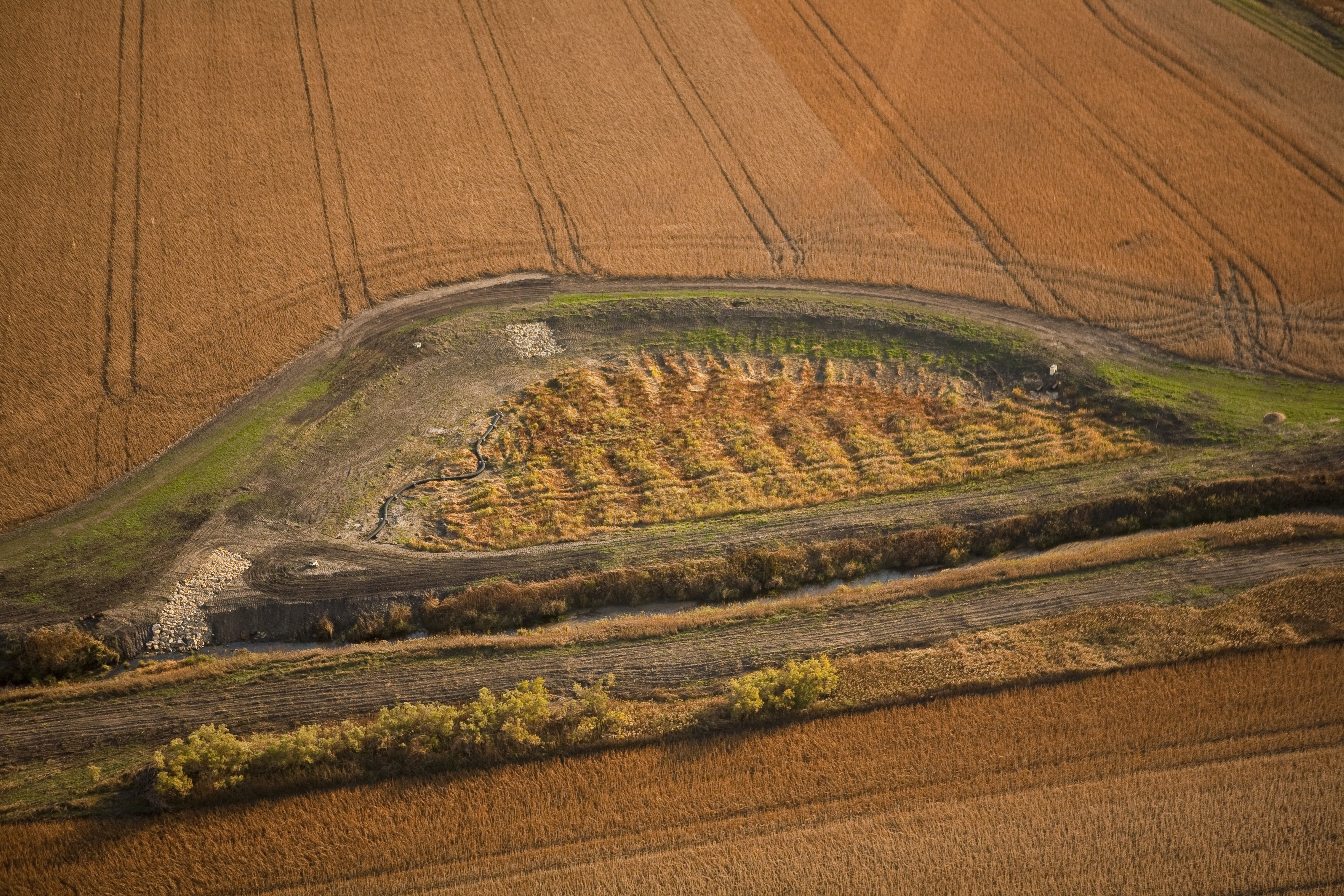
Outlet Adequacy Technical Report (Archived)
The adequacy of an outlet is a determining factor of whether or not a drainage project can be construction (MN Statute 103E.261 Subd 4 (4)). There is guidance in the Minnesota Public Drainage Manual (MPDM) that provides direction for calculating outlet adequacy for drainage project, but the manual does not provide full guidance on the topic.
A technical subcommittee of the Drainage Work Group (DWG) was convened to evaluate and provide recommendations to the full DWG regarding “outlet adequacy” as it is referenced in 103E.015 and 103E.261. The intention was to look at terms and methods used to evaluate outlets for drainage projects and to provide options and recommendations to make the evaluation of an outlet a more repeatable and defensible process when considering hydraulic changes to the system. The recommendations in this report developed by the technical subcommittee are only intended for consideration by the DWG.
*NOTE* The Document (available below) was developed through a technical subgroup of the DWG and presented to the full DWG for consideration. This document is not a formal DWG product and lacks consensus of the full DWG.
Multipurpose Drainage Management
From a Single Primary Purpose…
Much of Minnesota’s farmland was originally too wet to farm. Surface ditches and subsurface tile have been installed since the time of statehood to drain agricultural lands; remove stagnant water, insects and disease; and to facilitate transportation and commerce. Minnesota has approximately 19,150 miles of drainage ditches and extensive untallied miles of subsurface tile installed and maintained under what currently is Minn. Stat. Chapter 103E Drainage law. Much of this drainage occurred during the late 1800’s, early and middle 1900’s. These systems are owned by the benefited property owners and administered by a county, joint county or watershed district drainage authority. Private drainage ditches and patterned tile are also extensive in the primary agricultural lands of Minnesota.
…To Multiple Purposes
Drainage remains very important for agricultural production on much of Minnesota’s cropland. However, drainage impacts hydrology, stream stability, water quality and aquatic habitat. Because so much of Minnesota’s agricultural land includes drainage systems, multipurpose drainage management is critical for addressing altered hydrology, erosion and sedimentation, water quality, and habitat. Multipurpose Drainage Management of fields and drainage infrastructure can provide adequate drainage capacity, while reducing downstream peak flows and flooding, reducing erosion and sedimentation, improving water quality and improving aquatic habitat. These are important considerations for drainage projects in Section of 103E.015 of Minnesota drainage law. A number of resources are available to help identify, design and implement best management practices for Multipurpose Drainage Management.
Drainage Topic Listsers
If you are interested in drainage topics, here are listserv based resources to stay up to date. Two email listserves have been designed for drainage information:
- Drainage policy topics. Policy related updates to the Minnesota Public Drainage Manual; stakeholder Drainage Work Group recommendations and reports; legislative activity related to drainage; etc.
- Technical topics related to drainage. Drainage related research publications and articles, Drainage Management Team publications, etc.
Follow link here to sign up for drainage topic updates.
Technical Information and Resources
Factsheets
Presentations
- Intensified Tile Drainage Evaluation (pdf) - presentation by Rick Moore, Minnesota State University - Mankato, Water Resources Center
- Fingerprinting Sources of Suspended Sediments (pdf) - presentation by Shawn Schottler, St. Croix Watershed Research Station, Department of the Science Museum of Minnesota
- Drainage Rights PowerPoint slides (pptx), Matt Helmers, Iowa State University
Wetland Determination
DNR - Public Drainage Systems
- The DNR Public Drainage Systems page includes information primarily for Chapter 103E drainage authorities, their advisors, and DNR staff about communications with DNR under Chapter 103E Drainage and Chapter 103G Waters of the State.
- Chapter 103E drainage authorities include County Boards, Joint County Boards and Watershed District Boards
Other Sites Featuring Drainage Management
- Minnesota Department of Natural Resources - Best Practices for Preventing the Spread of Aquatic Invasive Species (pdf)
- Minnesota Department of Transportation - Culvert Design Practices That Ensure Safe Passage for Fish (pdf)
- University of Minnesota - Agricultural Drainage
- USDA Natural Resources Conservation Service (NRCS) - Drainage
- USDA Natural Resources Conservation Service (NRCS) - Installing and/or Modifying Drainage Systems
- Iowa Drainage Guide