
Learn about watershed management in this nine-part video series, created for board /commission members of watershed districts and watershed management organizations/ commissioners (collectively called "watershed-authorities").
| Link to Video | Video Description |
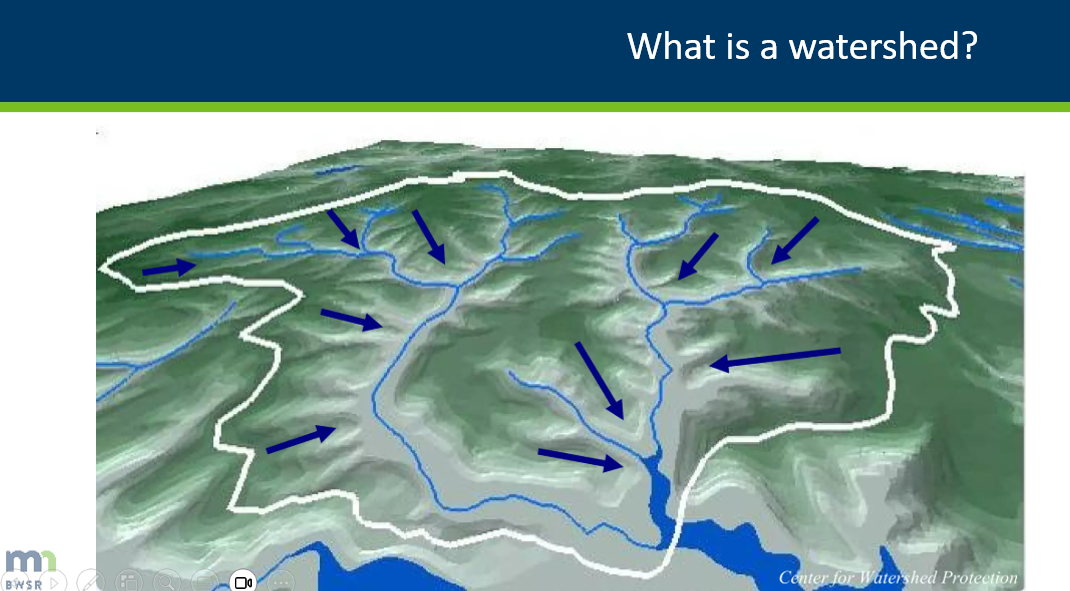
| What is a Watershed? {8:06} A watersheds is land that drains to a common water body. Key concepts: land-water connections, nested scales, and relationship to political units for watershed management. |
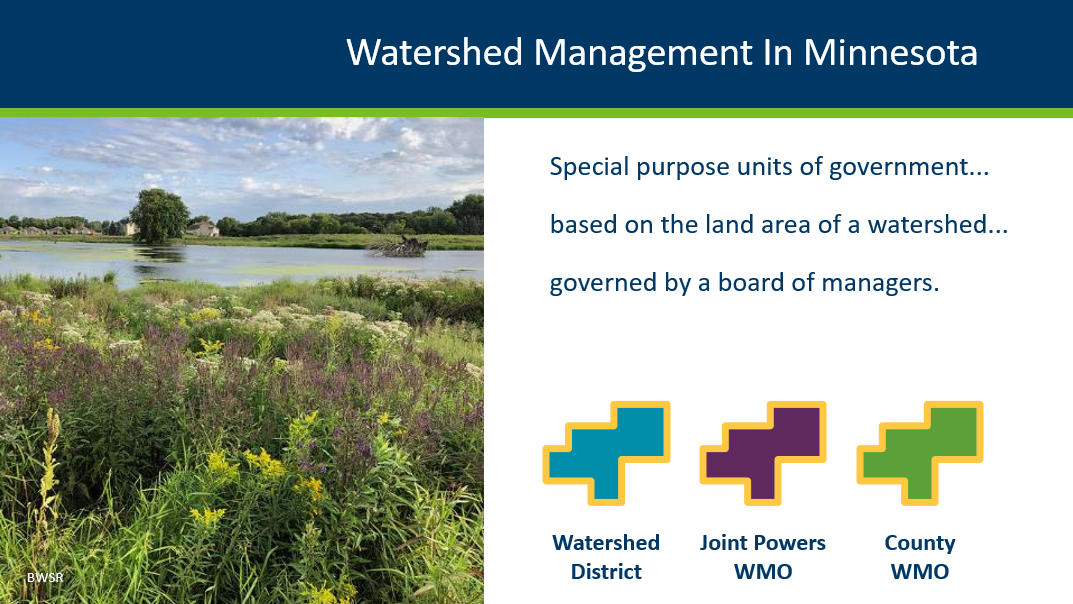
| Watershed Authorities: Types and Statutes {11:57} Minnesota’s watershed management authorities include watershed districts, joint powers WMOs, and county-based WMOs—each shaped by chapters 103B and 103D—to address water issues across natural boundaries. |
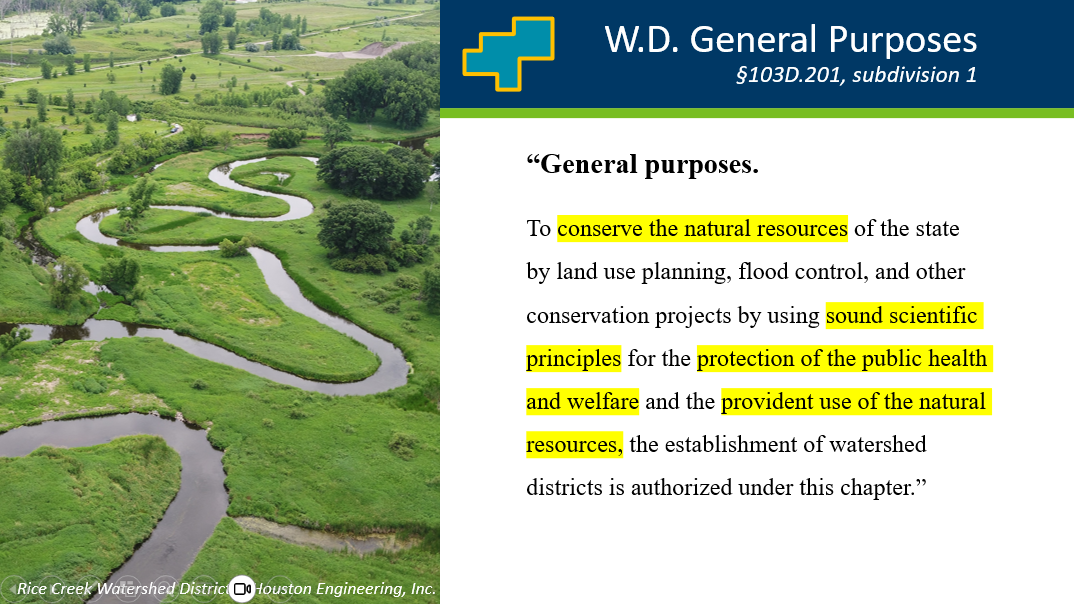
| Watershed Authorities: Purpose and Power {8:56} Watershed authorities are special purpose units of government with powers including tax levies, planning, rules, and contracts under chapters 103B and 103D. |
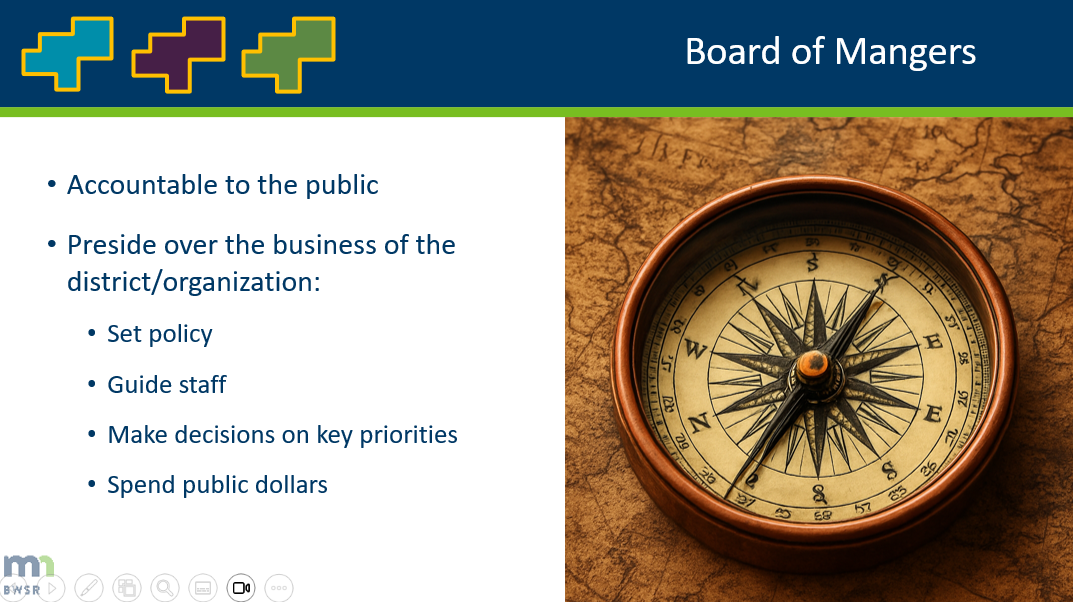
| Watershed Authorities: Boards and Policies {7:45} Boards are appointed by counties or cities and they have specific their policy-setting duties and governance responsibilities. |
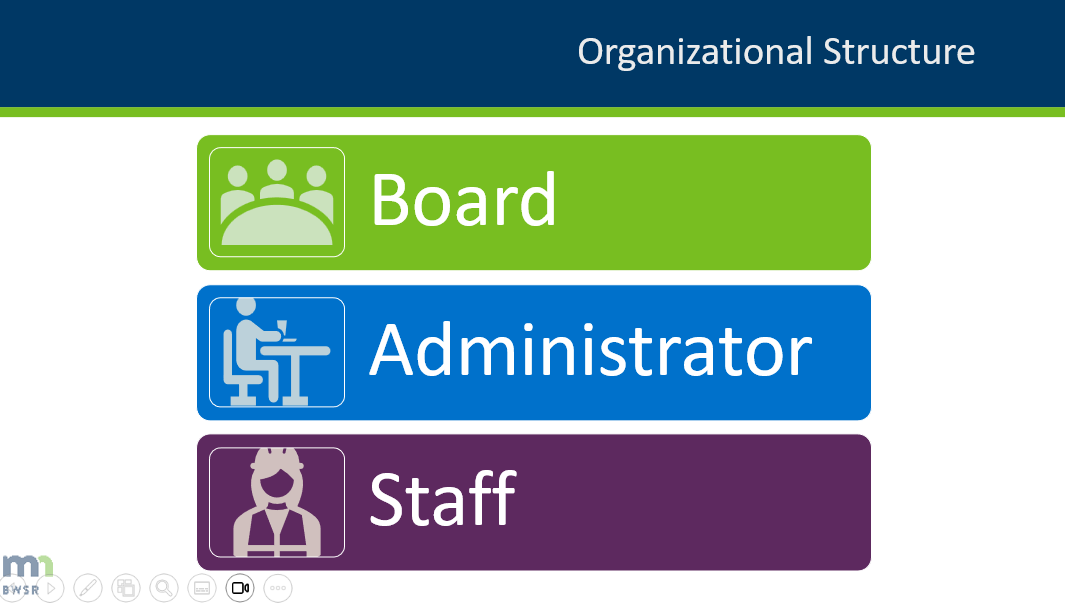
| Watershed Authorities: Structure and Roles {10:41} Clearly defined roles for boards, administrators, are important for effective watershed operations. |
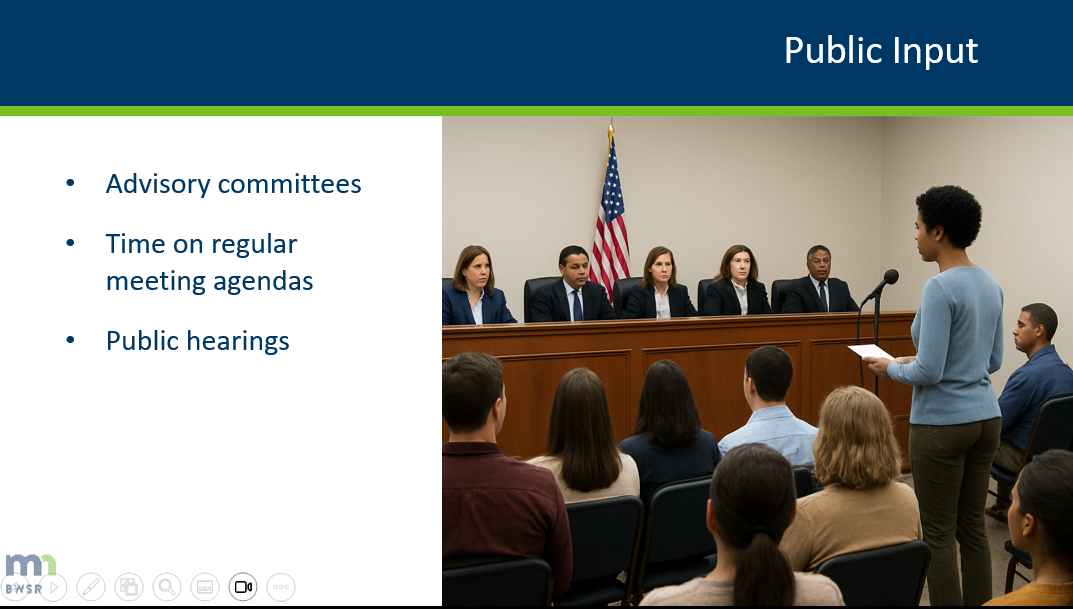
| Watershed Authorities: Meetings, Committees, and Public Input {11:12} Boards must follow open meeting laws, use advisory/technical committees for input, hold public hearings, and ensure data access. |
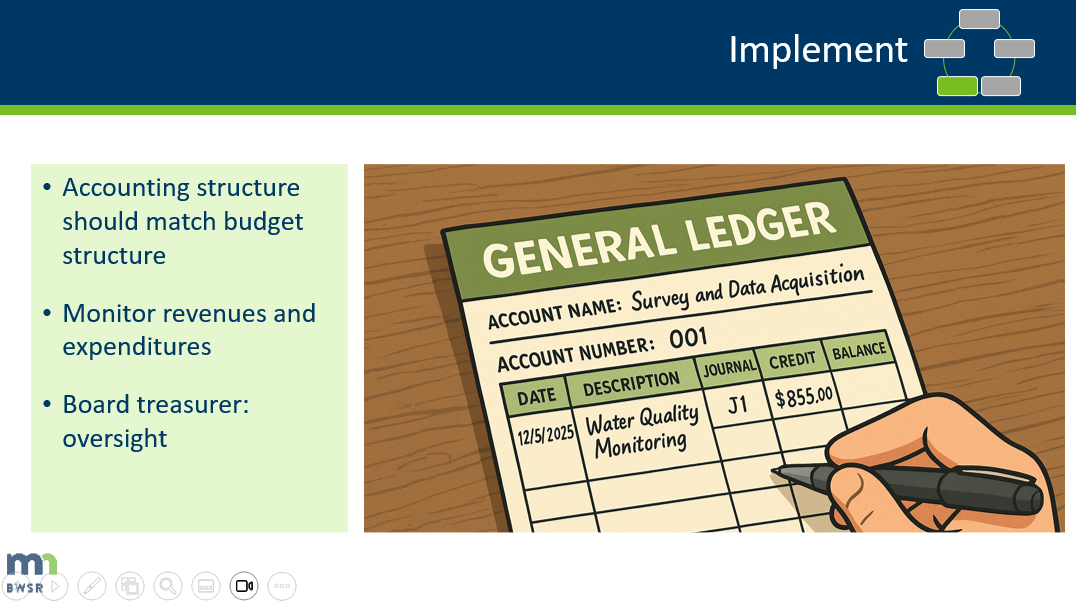
| Watershed Authorities: Budgeting and Finance {10:13} The budget must connect to the watershed plan and be developed with public input, implemented through a statutorily defined fund structure, and audited annually. |
| Watershed Authorities: Planning {12:54} The plan is a process with robust public involvement and a product, based on science, that clearly signals goals and intended actions. |
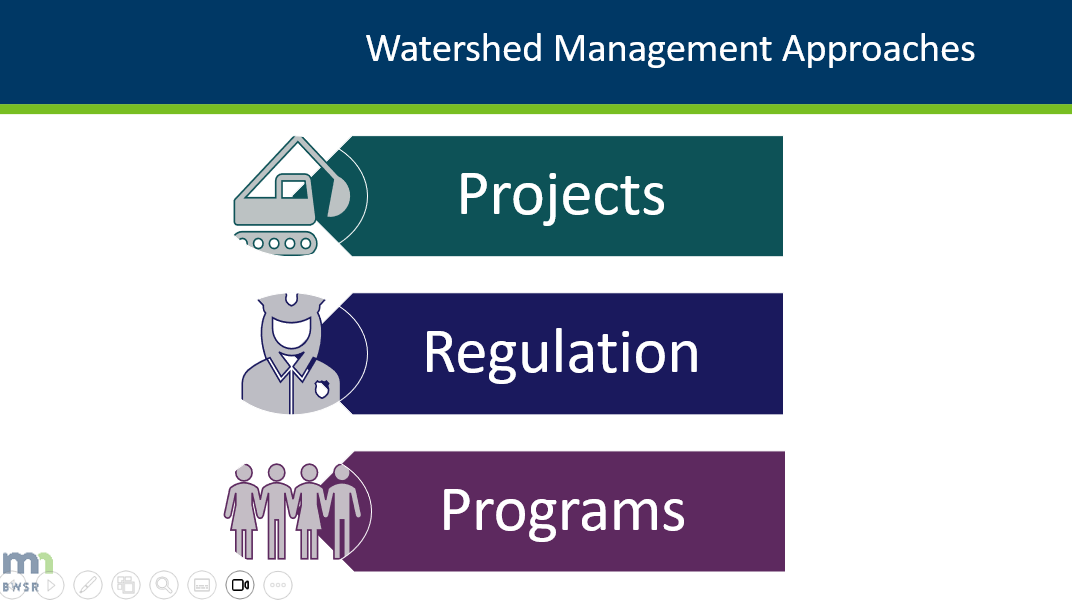
| Watershed Authorities: Implementation {9:54} Watershed authorities execute plans through projects (e.g., flood control, restorations), regulations via permits and rules under and programs like cost-share, outreach, monitoring. |